Setup guide
Water testing for small aquaponics systems
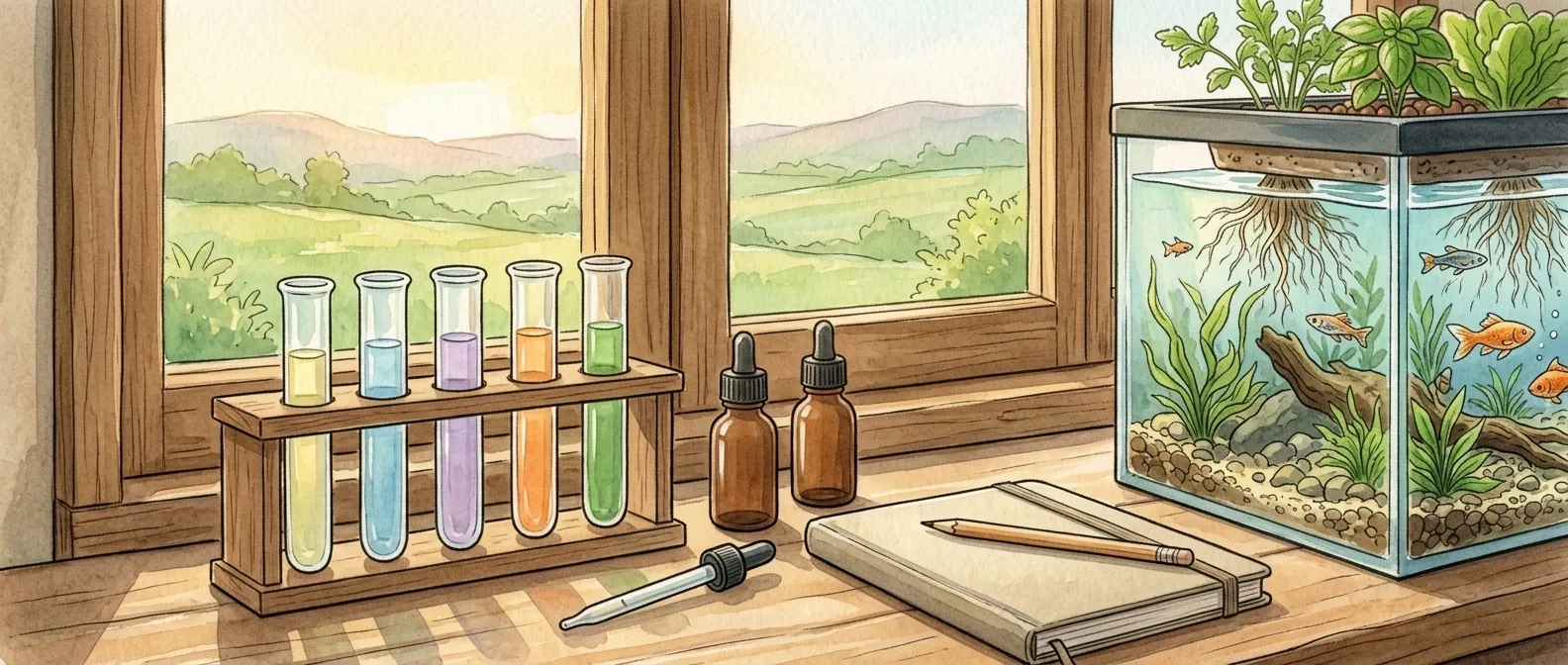
Water tests show what's happening inside an aquaponics system before the fish or plants do. A handful of readings, taken regularly and written down, tell you whether the bacteria are keeping up, whether pH is drifting, and whether the plants are getting enough to eat. None of it needs a lab, since a liquid freshwater test kit and a thermometer cover nearly everything a small system needs.
Liquid kits, strips, and meters
Liquid reagent kits are the standard for home aquaponics. They cost little per test and are accurate enough at the low ammonia and nitrite readings that matter most. Test strips are quicker but less precise, and they spoil easily in humid air once the container has been opened. A digital pH pen is handy for frequent checks if you calibrate it as the maker directs, but it doesn't replace the chemical tests for ammonia, nitrite, and nitrate.
Healthy ranges for a cycled system
The ranges below are typical targets for a small freshwater system with tropical or temperate aquarium fish. Several come from the FAO manual on small-scale aquaponic food production, adjusted toward the gentler end where small fish and shrimp need it.
| Test | Typical target | What an off reading usually means |
|---|---|---|
| pH | 6 to 7, often kept near 6.8 to 7.0 in small systems | Below 6.5 slows the bacteria, and above 7.5 locks out iron and makes ammonia more toxic |
| Ammonia (total) | 0 ppm | Overfeeding, too many fish, something dead in the system, or stalled bacteria |
| Nitrite | 0 ppm | The second group of bacteria is behind, which is common in the weeks after stocking |
| Nitrate | About 5 to 40 ppm | Near zero means the plants could use more feed, and a steady climb means the fish outpace the plants |
| KH (carbonate hardness) | About 60 to 140 ppm (3 to 8 dKH) | Low KH means pH is about to fall |
| Temperature | Steady, inside your fish's range | Swings stress fish and slow the bacteria |
What each reading tells you
pH
pH is the reading that moves the most over time. Nitrification slowly acidifies the water, so a working system drifts downward, and a sudden drop usually means the carbonate buffer has run out. Rising pH in a new system often comes from fresh clay media or limestone in the gravel. pH also shifts through the day as plants and algae use carbon dioxide, so test at the same time each day if you want readings you can compare. When you correct it, go slowly, by a few tenths per day at most.
Ammonia and nitrite
In a cycled system both should read zero. Most hobby kits report total ammonia, and the toxic share of it rises with pH and temperature, so 0.5 ppm in a tank at pH 7.8 deserves more urgency than the same reading at 6.8. Any nitrite at all in an established system means the nitrite-oxidizing bacteria have fallen behind. If either reads above about 0.5 ppm, stop feeding for a day, change 20 to 30% of the water with dechlorinated water, and retest the next day.
Nitrate
Nitrate is the plants' food, so in aquaponics you want some. A system holding steady between about 5 and 40 ppm has its fish and plants in balance. Near zero, with pale plants, the grow bed could use more fish or feed, and readings that climb week after week mean the plants aren't keeping up. Our guide to feeding and stocking and the article on top plants for filtration efficiency cover both sides of that balance. Shake the nitrate reagent bottles as hard and as long as the kit instructions say, since under-mixed reagent can read falsely low.
KH and GH
KH measures the carbonate buffer that holds pH steady. Once it runs low, pH can fall sharply within a day or two, so it's worth testing weekly in an established system. GH, or general hardness, mostly reflects calcium and magnesium, which matter for plant nutrition and for shrimp. Both come as inexpensive drop-count kits, and our guide to plant nutrient deficiencies explains how buffering ties in with feeding the plants.
Temperature
Check temperature daily with a simple thermometer. In a few gallons of water a sunny windowsill or a cold night can move it several degrees in hours, and both fish and bacteria respond to the change. Warm water also holds less oxygen, which matters on hot afternoons.
How often to test
During cycling, test ammonia, nitrite, and pH every day or two, following the stages in our guide to cycling a new system. For the first month after adding fish, test ammonia, nitrite, nitrate, and pH twice a week. Once the system has been stable for a while, a weekly round of pH, ammonia, nitrate, and KH is usually enough, plus an extra test whenever fish behave oddly, the water turns cloudy, or plants change color.
Keep a simple log with the date, the readings, and anything you changed, such as feeding, new fish, or a water change. Patterns that are invisible in a single test show up clearly over a few weeks of notes.
Getting readings you can trust
Rinse the test tubes in tank water before and after each use, and fill them right to the line. Read the colors against the card in daylight or under a white light, since warm room lighting shifts how they look. Reagents expire and drift with age, so check the dates on the bottles and replace old kits. If a reading looks alarming but the fish look fine, retest before acting, and if both look bad, our troubleshooting guide lists the likely causes.